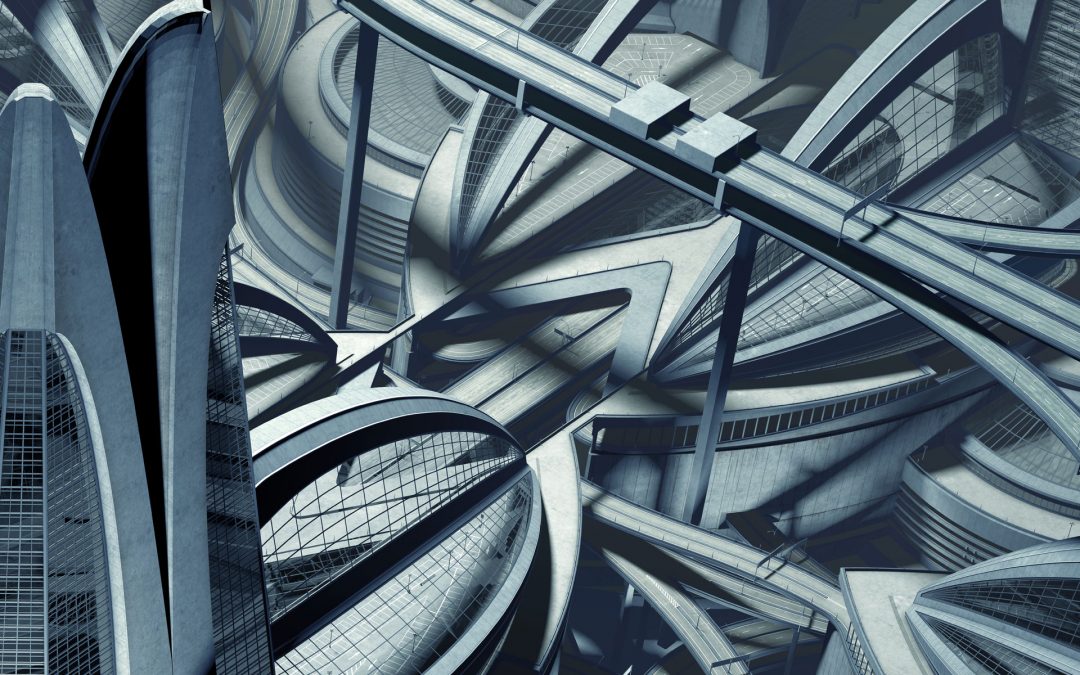
World Device II – Obscure


I used a geometrical pattern out of the Alhambra in Spain
as the basis for making this architectural world.
In mathematics this is called a ‘tessellation’:
an infinitely repeating shape without overlaps.
By using this method I add an extra dimension to
the original historic pattern. This work tries to form
a bridge between our contemporary society and the historical culture
on which we have built through the ages.
We are standing on the shoulders of giants.
Searching for harmony in geometrical shapes is
like searching for the holy grail.
Intuitively I know that the ultimate beauty lies within it,
but the road that leads to it I have yet to find.
Max Tegmark, a renowned Swedish-American Professor
in Physics and Cosmology at MIT, wrote a book called
“Our Mathematical Universe” in which he posits that
reality is in fact a mathematical structure.
Maybe with this work I can reveal a glimpse of
he mathematical base structure behind our reality.


World Device II – Bridge
78 x 78 cm, print on German etching paper, floating frame. Limited edition.

World Device II – Obscure
160 x 100 cm, print on German etching paper, floating frame. Limited edition.